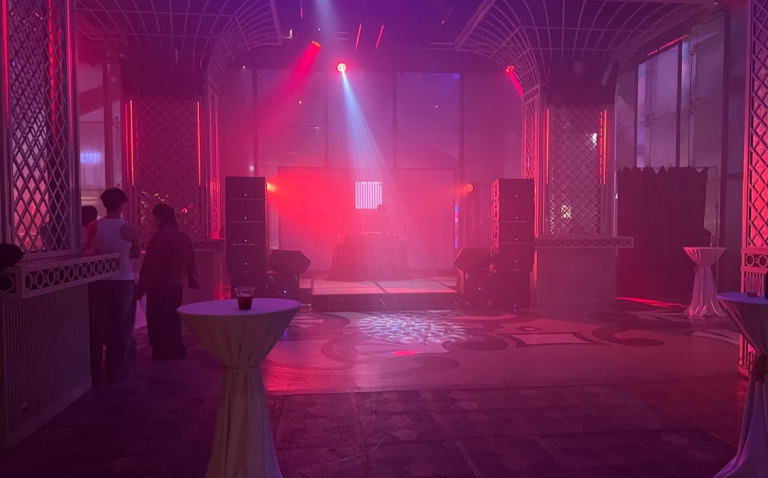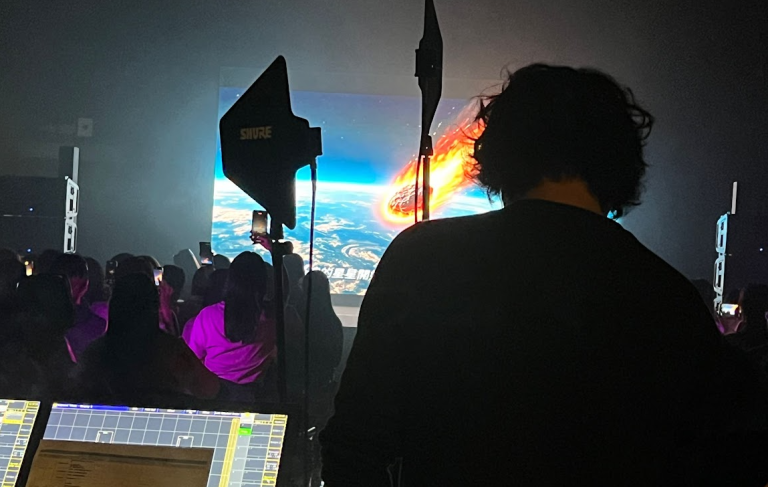

For concerts, large‑scale celebrations and sporting events, line‑array loudspeaker systems stand as the core hardware for professional sound reinforcement.
For major productions hosted at the Singapore National Stadium, line‑array systems deliver tight directional control and long‑throw projection, resolving excessive sound decay within extra‑large venues. This article breaks down all critical practical knowledge you should master before renting a line‑array loudspeaker system.
How Sound Travels in Line‑Array Loudspeakers
Conventional loudspeakers operate as point‑source transducers, emitting sound outward as spherical wavefronts. Per the inverse‑square law, the sound‑pressure level drops by 6 dB each time the propagation distance doubles. In hundred‑metre‑scale large venues, point‑source systems cannot achieve full‑coverage audio; audience members seated far towards the rear may struggle to hear clearly.This is why renting long throw line array systems for outdoor concerts is mandatory for large productions.
Line‑array loudspeaker systems are engineered to minimise acoustic‑energy loss. Multiple loudspeaker cabinets are vertically stacked to produce near‑cylindrical wavefronts[1]. Cylindrical waves are highly directional and spread primarily along the horizontal plane. Within its effective operating range, sound‑pressure level decays at half the rate of conventional loudspeakers as distance doubles.
Even so, real‑world line‑array performance is bounded by the critical‑distance threshold. Even with this physical limitation, premium‑grade hardware delivers reliable performance for large‑venue deployments. Note that while high‑frequency components exhibit relatively low intrinsic decay, high‑frequency content still suffers attenuation over long‑distance transmission.
How Line‑Arrays Achieve Directional Control
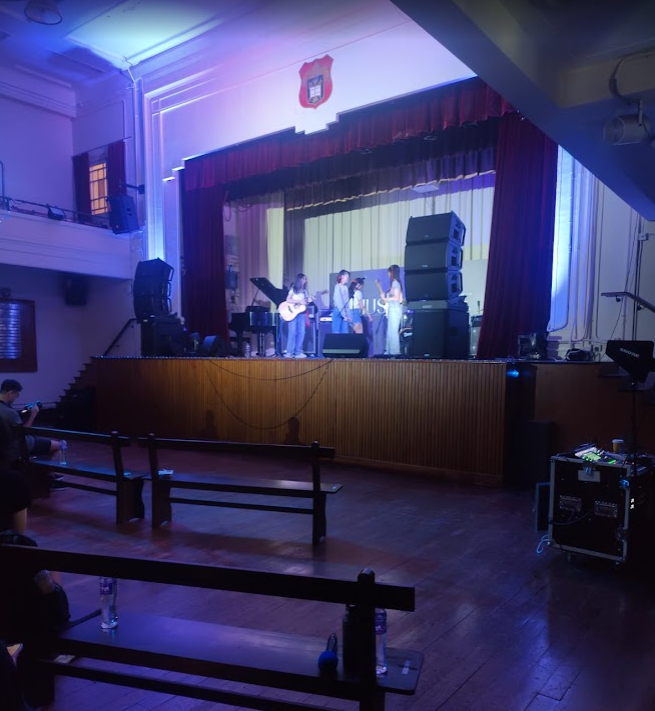
The vertical directivity of any rented line array sound system is directly proportional to its overall array length. Longer array assemblies grant better control over longer‑wavelength mid‑ and low‑frequency signals[2]. Undersized arrays are not recommended, as low‑frequency build‑up will likely occur behind the stage.
Sound‑wave interference is another key consideration. The acoustic centre of adjacent cabinets must be spaced at or below half the wavelength of the highest target operating frequency. Low‑frequency performance is comparatively manageable, yet 15 kHz high‑frequency signals are prone to acoustic interference. Professional line‑array cabinets commonly adopt constant‑phase waveguide horn technology to overcome spacing‑related high‑frequency limitations.
Beyond the well‑known vertical straight‑line setup, three mainstream array geometries are widely deployed:
- Straight Array: All cabinets sit at a 0‑degree relative angle. Optimised for long‑throw output, suited for flat, deeply‑dimensioned outdoor venues.
- J‑Shape Array: Top‑section cabinets fire at 0° or slight offset angles to reach distant audience areas, while lower cabinets apply progressively steeper downward tilt angles (e.g. 2°, 4°, 8°) to cover near‑field listeners.
- Spiral Array: An algorithm‑driven geometry developed by acoustic specialist Mark Ureda, where cabinet splay angles increase in smooth, continuous increments.
Managing Acoustic Interference in Line‑Array Systems
Minimising Sidelobes
When multiple transducers operate together, sound waves constructively combine in‑phase to form the main lobe. Off‑axis beam spreading generates sidelobes[3]. Sidelobes waste acoustic energy and may trigger reverberation via surface reflections. Audio engineers mitigate this issue through precise cabinet‑angle tuning and DSP‑based FIR filter calibration.
Horizontal‑Symmetric vs Asymmetric Design Selection
A horizontally‑symmetric layout places the high‑frequency horn at the centre, with low‑mid drivers mounted symmetrically on both sides. This configuration delivers good horizontal phase coherence but tends to produce narrow‑beam characteristics.
A horizontally‑asymmetric layout interleaves high‑frequency and low‑mid transducers. It eliminates interference imposed by mid‑range drivers on high‑frequency output, reduces internal cabinet‑bound wave reflection, and yields a smoother horizontal coverage pattern.
Tuning Low‑Frequency Directivity
Individual subwoofers radiate sound in a near‑360° omnidirectional pattern. Large volumes of low‑frequency energy bounce back toward the stage and trigger sharp microphone feedback. Engineers resolve this challenge using cardioid or hypercardioid subwoofer‑array techniques[4].
Implementation methods include aiming selected subwoofer cabinets rearwards toward the stage, or adjusting physical spacing, phase inversion and DSP‑controlled time delay between front‑to‑back arranged subwoofers. Anti‑phase sound waves generated at the rear of the sub‑array partially cancel backward‑travelling sound‑pressure levels while reinforcing low‑frequency output directed toward the audience.
Point‑Source Loudspeaker System VS Line‑Array Loudspeaker System
| Comparison Metric | Point‑Source Loudspeaker System | Line‑Array Loudspeaker System |
|---|---|---|
| Wavefront Geometry | Spherical Wavefront | Cylindrical Wavefront (within critical distance) |
| Energy‑Decay Characteristic | 6 dB attenuation per distance doubling (Inverse‑Square Law) | 3 dB attenuation per distance doubling (near‑field cylindrical‑wave propagation) |
| Vertical Directivity Control | Determined primarily by individual horn dispersion (typically 40°–90°) | Precisely governed by total array length and cabinet splay angles (narrowable to several degrees) |
| Sound‑Field Uniformity | Extremely high SPL near‑field; rapid decay at far‑field positions | Reduced SPL variance between front‑rear seating; continuous, consistent coverage |
| Suitable Venue Types | Small‑to‑medium conference rooms, bars, theatre fill‑in systems, multi‑purpose halls | Large theatres, indoor arenas, outdoor music festivals, multi‑thousand‑capacity concerts |
Real‑World Line‑Array Deployments in Singapore
Singapore National Stadium
This 55 000‑capacity mega‑venue features a massive retractable roof and deeply tiered seating, presenting significant reverberation‑time‑management challenges[5]. Multiple high‑power long‑throw line‑array hangs are suspended beneath the central roof structure. Carefully calibrated vertical directivity delivers targeted beam coverage across upper, middle and lower seating tiers and suppresses multi‑path echo artifacts.
The Star Theatre, Star Performing Arts Centre
This 5 000‑seat tiered indoor venue features steep vertical geometry and multi‑level overhanging balconies. Its primary sound‑reinforcement system employs phase‑corrected line‑array modules[6]. J‑shape and spiral‑array configurations deliver seamless full‑venue SPL coverage alongside high‑fidelity music reproduction.
References
[1] AES Technical Council. Acoustic Wavefront Propagation and Line Source Behavior in Professional Sound Reinforcement. Journal of the Audio Engineering Society (JAES), 2018.
[2] Ureda, Mark. Line Array Theory and Progressive Angle Curvature Algorithms. AES Convention Paper 5304, Audio Engineering Society.
[3] Meyer Sound Laboratories. Acoustic Waveguide Design and Lobing Suppression in Vertical Arrays. Technical White Paper Series, Electro‑Acoustics Division.
[4] d&b audiotechnik. Cardioid and Hypercardioid Subwoofer Array Configuration Guidelines for Stage Noise Suppression. System Planning & Acoustics Manual.
[5] Singapore Sports Hub Infrastructure Technical Report. Electro‑Acoustical Coverage and Reverberation Control in the National Stadium. Mechanical & Electrical Engineering Archives.
[6] The Star PAC Infrastructure Design Document. Acoustic Modeling and Line Array Integration for Multi‑Tiered Performance Venues. Venue Operations Manual.
Disclaimer
All brand names, technical terminologies and performing‑arts venues mentioned in this article (including but not limited to Singapore National Stadium, Star Performing Arts Centre and Marina Bay Sands Theatre) are the intellectual property of their respective rightsholders. The acoustic‑physics principles and venue case studies summarised within this article are compiled from professional electro‑acoustic‑engineering standards and publicly‑available industry documentation.